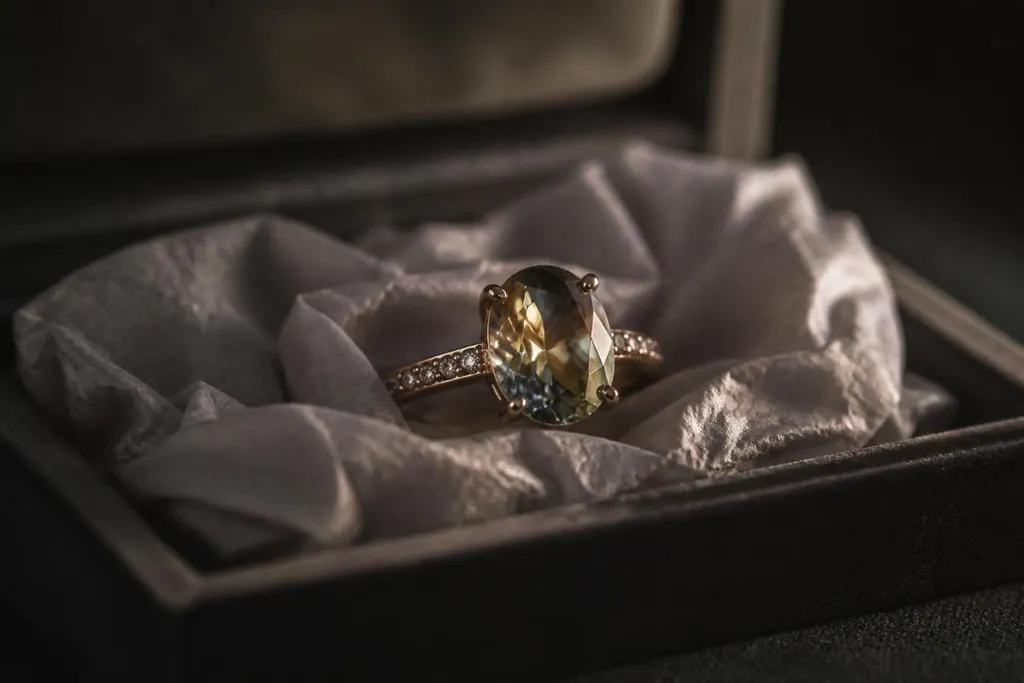
A coloured diamond changes the usual order of engagement ring design. With a colourless stone, the setting often acts as a neutral framework; with a coloured lab-grown diamond, every surrounding detail can strengthen, soften or contrast with the centre stone's hue. Metal colour, setting style and accompanying stones therefore become part of how the diamond itself is perceived.
For anyone looking to design your own ring from Lily Arkwright, it makes sense to begin with the coloured lab-grown diamond rather than choosing the setting first. Consider the shade, shape and dimensions together, then build the rest of the ring around those characteristics. This stone-led approach helps create a design in which the colour feels intentional rather than simply inserted into a conventional engagement ring.
Start With Colour, Shape and Proportion
Colour is naturally the first attraction, but shape determines how that colour is presented.
Round cuts offer symmetry and lively brilliance, while oval and pear shapes introduce length and can create a more elongated appearance on the finger. Cushion cuts combine curved corners with a substantial face-up presence, making them particularly suited to designs where the centre colour should feel soft yet prominent. Radiant cuts provide a more geometric outline while retaining energetic sparkle.
Proportion matters alongside carat weight. Two diamonds of the same weight can have different visible dimensions depending on shape and cut. Someone may prefer a 2-carat coloured diamond over a 1-carat option becaus
e its greater surface area provides more opportunity to appreciate the colour, particularly in a simple solitaire setting.
Another wearer might deliberately choose a smaller centre stone and use a halo or contrasting side stones to create greater overall presence.
The objective is not maximum size, but enough scale to display the chosen colour effectively.
Choose a Metal That Supports the Diamond
Precious metal can subtly alter the visual impression of a coloured centre stone.
White gold and platinum create a cool, relatively neutral framework. They can provide clear contrast around warmer coloured diamonds and allow the distinction between the gemstone and setting to remain obvious.
Yellow gold introduces warmth. Depending on the diamond's hue, this can create either a harmonious tonal effect or a deliberate contrast. It can be particularly effective when the wearer already favours traditional yellow gold jewellery.
Rose gold brings softer pink warmth and can complement diamonds with blush, pink or related tones. With cooler stones, it creates a more noticeable contrast.
There is no universal best metal for a coloured diamond. The better question is whether the ring should amplify the centre stone's colour or frame it against something distinctly different.
Existing jewellery also matters. An unusual centre stone can still feel highly versatile when its metal coordinates naturally with pieces the wearer already owns.
Decide Whether the Setting Should Contrast or Complement
A solitaire gives the coloured diamond maximum independence. With little surrounding detail, the eye concentrates on the stone's shape and hue. This approach can be particularly effective when the centre diamond already has enough scale and colour intensity to command attention.
A halo changes the effect by creating a border around the centre stone. Colourless accent diamonds can establish contrast and make the central colour appear more distinct. Diamond-set shoulders can achieve something similar more subtly, introducing additional brilliance without completely surrounding the stone.
Three-stone designs offer another possibility. Side stones can support the centre diamond while adding width across the finger, but their proportions should remain controlled if the coloured stone is intended to remain dominant.
Setting height deserves practical thought as well. A higher profile can give the centre stone more prominence, while a lower design may feel more protected and convenient for frequent wear.
Refine the Ring Around Everyday Wear
Once the major visual decisions are established, practical details complete the design.
Band width should balance the centre diamond. A fine band can make a larger stone appear even more prominent, while a slightly broader band may create better visual support for a substantial centre setting.
Consider a future wedding band too. If a straight band needs to sit closely alongside the engagement ring, the gallery and setting profile should provide sufficient clearance.
Claw placement is another small but important detail. Claws need to protect vulnerable points and hold the diamond securely without obscuring its outline unnecessarily.
Finally, think about how the ring will be worn. Someone with an active routine may value a more protected setting over additional height, whereas another wearer may happily accept a more prominent profile for the visual effect it creates.
Final Thought
Designing around a coloured lab-grown diamond is an exercise in creating relationships between colour, shape, metal and setting. Each decision changes how the centre stone is seen, which makes starting with the diamond itself particularly valuable.
Choose a setting that gives the colour a clear role, use precious metal deliberately and keep proportions connected to the wearer's hand and lifestyle. The finished ring should not simply contain a coloured diamond; it should feel as though every element was designed specifically to make that particular stone belong.